Get Inspired
Your Go-To Guide for Understanding Beef Cuts


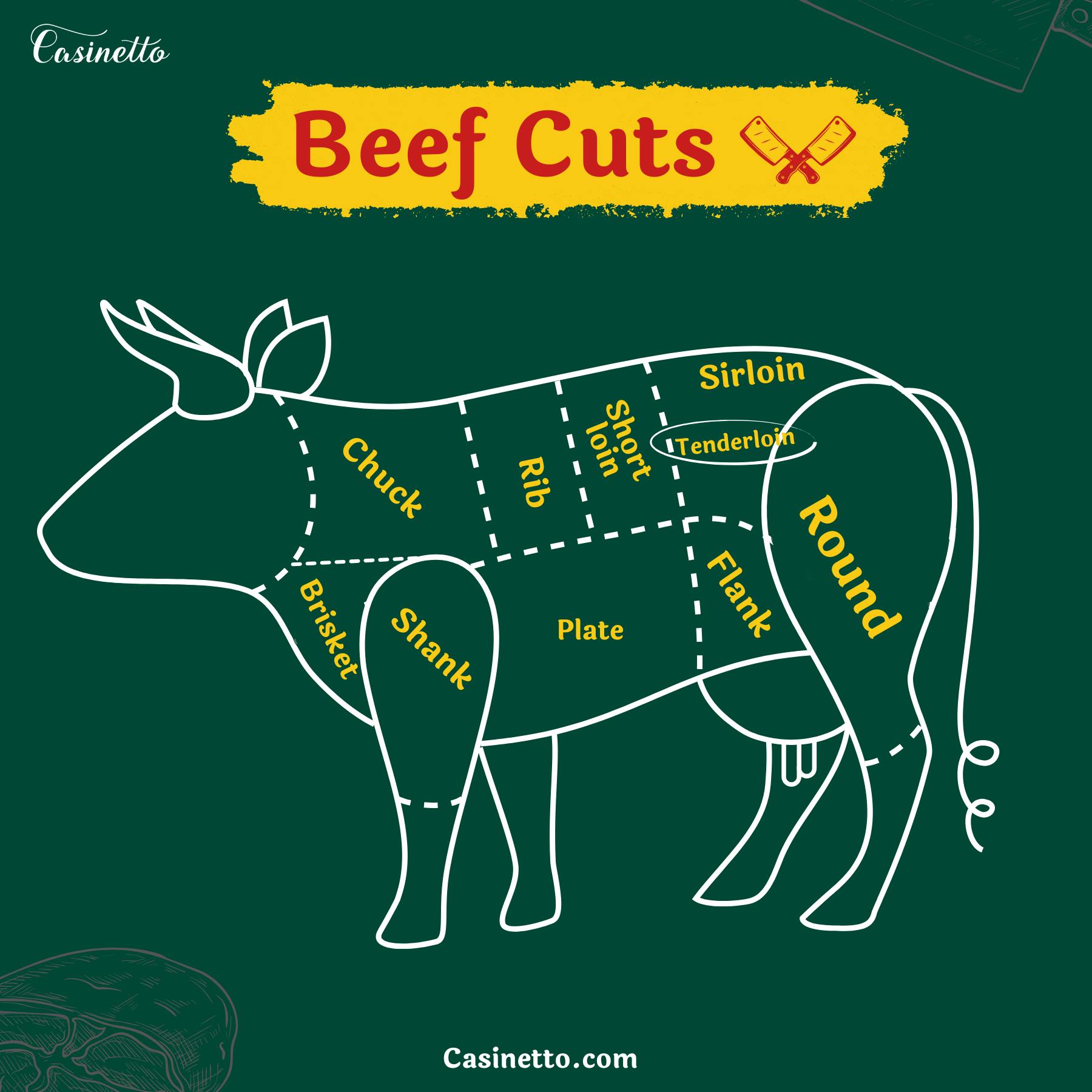
Understanding the different beef cuts can transform your shopping, cooking, and dining experiences. Knowing which cuts are best for grilling, roasting, or slow cooking helps you make better decisions at the butcher, ensuring you select the right cut for your needs.
In the kitchen, this knowledge allows you to cook beef to perfection, enhancing both flavour and tenderness. When dining out, you can confidently choose dishes based on your preferences, understanding exactly what to expect from each cut.
This guide will walk you through each beef part in detail, explaining where they come from, what makes them unique, and how best to prepare them. Let’s dive in.
Firstly, you need to know that beef is divided into primal cuts, the cow's main sections, and then further broken down into smaller subprimals or service cuts, which become the steaks, roasts, and other cuts available in stores.
The cow is split into two halves along the backbone, with the forequarter referring to the front and the hindquarter to the back. Tender cuts, like the rib and tenderloin, are found in areas where muscles are less used, while tougher cuts, such as those from the shoulder and legs, come from the more exercised muscles.
Forequarter Cuts
The forequarter refers to the front part of the beef carcass and includes several key cuts: the chuck, ribs, plate, brisket, and shank.
Beef chuck
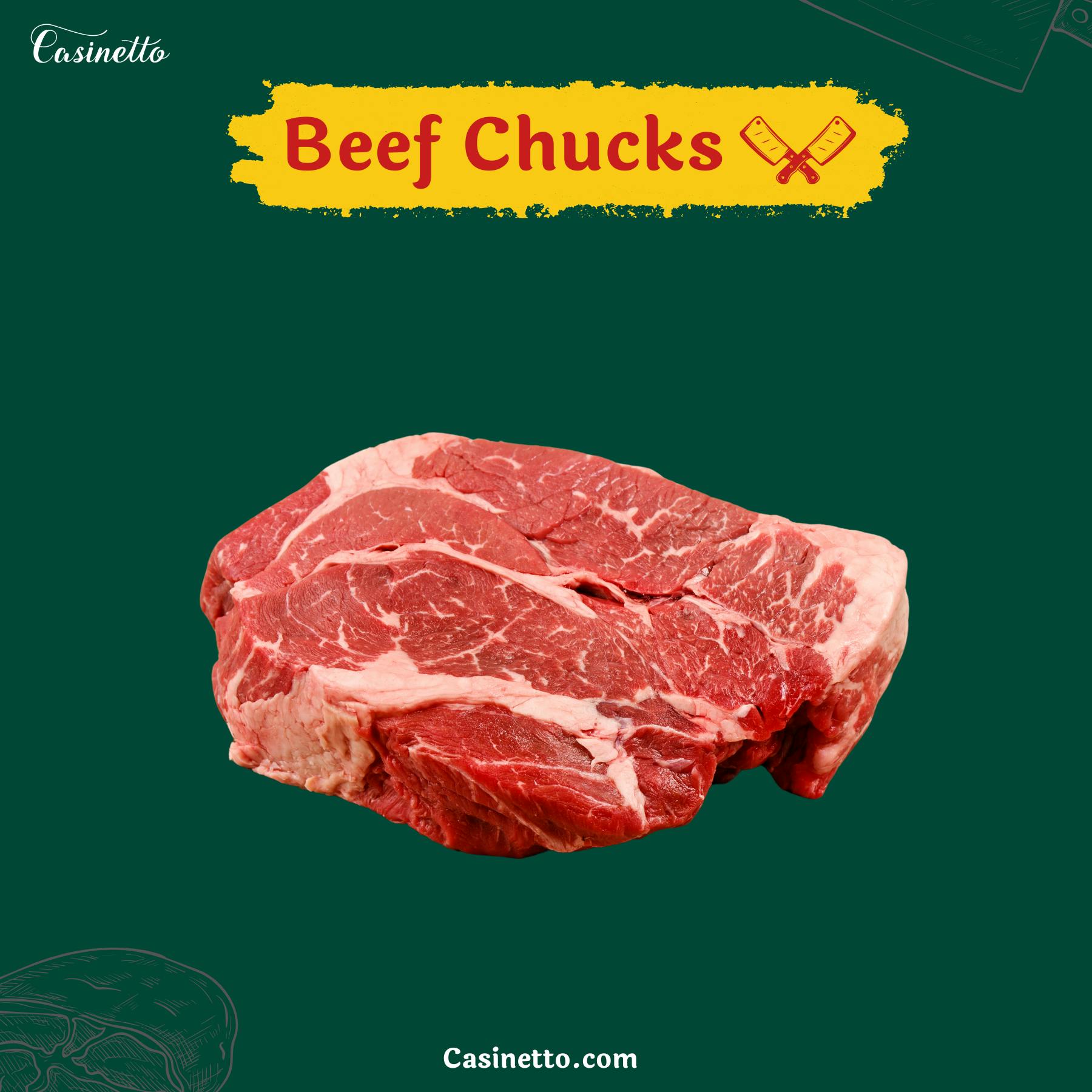
Beef chuck comes from the shoulder area of the cow, which is a well-exercised muscle group, making it flavourful but tougher than cuts from the more sedentary parts of the animal.
It’s commonly used for slow-cooked dishes like pot roasts, stews, Spezzatino di Manzo, and Ragù alla Bolognese, where ground chuck is used to make the iconic meat sauce for pasta, and the long cooking process breaks down the tough fibres and results in tender, juicy meat.
Cuts from the chuck include the shoulder roast, chuck eye roast, and flat iron steak, all of which are known for their rich, beefy flavour. This versatile cut can also be ground for hamburgers, offering a great balance of fat and flavour.
Beef Rib
The beef rib cut comes from the upper central section of the cow’s rib area, specifically from the 6th to the 12th ribs. This versatile cut is the foundation for many beloved dishes, including a standing rib roast (commonly known as a prime rib), ribeye steak, and the classic French entrecôte.
In Italian cuisine, it is also used to create dishes such as Costata alla Fiorentina, the famous Tuscan T-bone steak, and Arrosto di Manzo, a slow-roasted beef often served with a rich gravy.
Because this meat is naturally tender, it performs well with dry-heat cooking methods such as roasting or grilling, ensuring it remains succulent and doesn’t become tough.
The beef rib cut sits just above the beef plate, with a subtle transition between the two sections. The lower part of the rib, sometimes considered part of the plate, is used to create rich and tender short ribs. This connection underscores the importance of the rib cut in the forequarter, paving the way for a deeper dive into the cuts and cooking techniques that unlock the full potential of each.
Beef Plate
The beef plate, also known as the short plate, includes cuts like short ribs and skirt steak. The skirt steak comes from the diaphragm muscle and is full of flavour, though it's thin and cooks quickly over high heat.
To avoid chewiness, always slice it against the grain. The beef plate has a lot of cartilage, especially near the ribs, which is why short ribs from this area are best cooked slowly using braising. This method helps break down the cartilage, making the meat tender and full of flavour. The beef plate is also fatty, making it great for ground beef.
Beef Brisket
Brisket is known for its rich flavour, though it’s naturally tougher. Its moderate fat content helps tenderise the meat when cooked properly. Sourced from the chest area, specifically the pectoral muscle, brisket adds a unique taste to dishes.
Because of its thick muscle fibres, it needs slow, low-temperature cooking to break down the toughness and become tender. Brisket is commonly used for pot roast and corned beef and is a favourite for barbecue and smoking, where slow cooking brings out its best qualities.
Beef Shank
The beef shank is a flavorful cut that originates from the leg of the cow, specifically the thigh area. There are two shanks per carcass—one from the forequarter (front) and one from the hindquarter (back).
Known for its toughness, the beef shank is a muscle that gets a lot of use, which results in a rich network of connective tissue. While this cut can seem tough, slow-cooking or braising it for several hours breaks down the connective tissue, transforming it into a melt-in-your-mouth tenderness.
Beef shank is a star ingredient in the iconic Italian dish osso buco, where its slow-cooked texture and deep, savoury flavour truly shine, making it a favourite among food enthusiasts who appreciate hearty, flavourful meals.
Hindquarter Cuts
The second half of the animal is called the hindquarter, these beef cuts come from the back half of the cow, where muscles are more developed and less used compared to the front, resulting in meat that is generally more tender and easier to cook.
Beef Short Loin
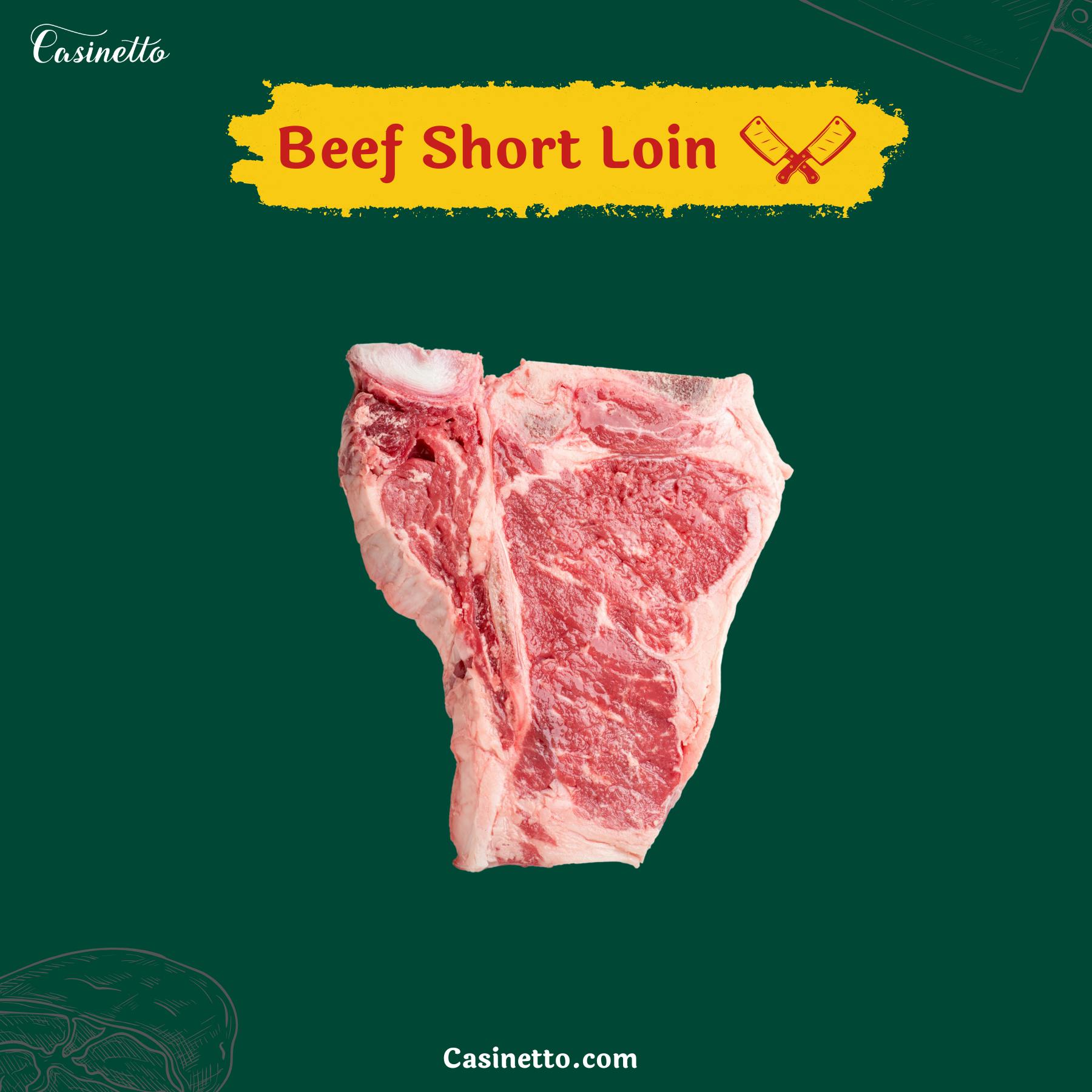
The beef short loin, sourced from the hindquarters of the cow, is considered one of the most prized beef cuts for its exceptional tenderness and fine texture.
Located near the back of the animal, this cut is home to some of the most iconic and highly sought-after steaks, including T-bone steaks, porterhouse steaks, and strip steaks, all of which are renowned for their rich flavour and melt-in-your-mouth texture.
Measuring approximately 16 to 18 inches in length, the short loin yields between 11 to 14 steaks, depending on the thickness of the cuts. Butchers typically begin their work at the rib end, which is the front part of the short loin, and work their way towards the sirloin end at the back. This process results in three main categories of cuts, each with unique characteristics:
- First cuts: Near the rib end, you get club steaks or bone-in strip steaks.
- Middle cuts: The centre part is where T-bone steaks are cut – usually around six or seven of them.
- Final cuts: A butcher might get two or three porterhouse steaks at the sirloin end.
Thanks to its high tenderness, the beef short loin is best suited for dry-heat cooking methods, such as grilling, pan-frying, or roasting. The fine marbling and exceptional texture make it perfect for achieving a beautifully seared, juicy steak with minimal effort.
Whether you're a home cook or a seasoned chef, beef short loin cuts deliver an unforgettable dining experience that highlights the natural flavours of high-quality beef.
Beef Sirloin
Beef sirloin comes from the area between the 13th rib and the hip bone, and is divided into top and bottom sirloin. Top sirloin is slightly tougher, making it great for grilling, while bottom sirloin includes cuts like tri-tip and flap, ideal for roasting or barbecuing. It’s also used for making ground beef and some Italian dishes like Bistecca alla Fiorentina (a Tuscan steak) and Tagliata di Manzo (sliced steak with arugula).
Beef Tenderloin
The beef tenderloin is the cow's most tender beef cut, located in the loin area. It has two prime cuts: filet mignon, from the tip, and chateaubriand, from the centre.
The tenderloin stretches from the short loin into the sirloin, with the section extending into the sirloin called the butt tenderloin.
It’s best cooked quickly using dry-heat methods like grilling or broiling to preserve its tenderness or you can use it to prepare other Italian dishes like Filetto alla Wellington and Tournedos Rossini.
Beef Flank

Beef flank is a lean cut with tough muscle fibres, meaning overcooking it can make the meat even tougher. The best way to cook a flank steak is by grilling it quickly over high heat. Marinating the meat beforehand helps retain moisture, but the key is to avoid overcooking.
After cooking, slice the steak thinly against the grain, the natural muscle fibres, to reduce chewiness. Flank steak is also excellent for braising, where slow cooking in liquid enhances its flavour and tenderness. Additionally, it’s a popular choice for making ground beef due to its bold flavour.
Beef Round
The beef round comes from the back leg of the cow, where the muscles work hard, making it lean but tougher. Like the sirloin, it's divided into three main parts:
- Top Round (Inside Round)
- Bottom Round (Outside Round): This section includes cuts like rump roast and eye of round.
- Knuckle
Both top and bottom rounds are low in fat and collagen, meaning they don’t tenderise as easily when braised, unlike cuts like chuck that have more collagen to keep them moist and tender. For the best results, slow-roast a beef round roast to medium-rare, then slice thinly against the grain to maximise tenderness and reduce chewiness.
In conclusion, understanding the various cuts of beef empowers you to make informed decisions when shopping, cooking, and dining. Whether you’re selecting the perfect steak for grilling or preparing a slow-cooked roast, knowing the right cut for the job ensures a more enjoyable and successful culinary experience.
By exploring the unique qualities of each beef part, you can confidently experiment with different cooking methods, unlocking new flavours and textures. With this guide, you now know how to bring out the best in every cut of beef, transforming any meal into something truly special.
Posted on April 2, 0025
Every Dessert Has a Season. Tiramisu Didn't Get the Memo
Every dessert has its season. This is not an opinion, it's just true, and somewhere inside you, you already know it. Chocolate lava cake is in December. The kind of thing you order when it's cold outside and you've stopped pretending to care about anything. Panna cotta is July, white, minimal, barely there, like it's also too hot to try. Crumble is October without question. Apple, pear, whatever's in the bowl, it belongs to grey skies and Sunday afternoons and the specific melancholy of a season ending. These desserts have their moment. They know it. They stay in their lane. Tiramisu does not stay in its lane Tiramisu shows up in January when you need something that feels like a decision. It shows up in April because the weather is nice and why not. It's on the menu in August at that outdoor restaurant and you order it even though it's 38 degrees because of course you do. It appears at Christmas, at birthdays, on a Wednesday with no occasion whatsoever. It does not check the calendar. It does not ask if this is a good time. And the thing is, it's never wrong. That's what separates it. Seasonal desserts are right once a year, maybe twice. Tiramisu is right in the way that a good espresso is right, in the way that sitting down after a long day is right. Not because of the weather. Because of what it does. It lifts. That's the whole job, and the job doesn't have an off-season. There's a reason Italian nonnas aren't making tiramisu only in autumn. There's a reason it's on every menu, in every month, in every city that has ever decided to take dessert seriously. It's not nostalgia. It's not a habit. The combination, espresso, mascarpone, cocoa, patience, works on a human being regardless of what the temperature is outside. Some things are just built differently The ones that prove it every time, in every season, start with the right ingredients. Mascarpone that tastes like it came from somewhere specific. Savoiardi that haven't forgotten what they're for. Cocoa that finishes clean. Not seasonal. Not occasional. Just right.
Casinetto Named Best Gourmet Food Supplier by CPI Media Group
We're proud to announce that Casinetto has been recognised as Best Gourmet Food Supplier by CPI Media Group, a distinction that reflects years of dedication to elevating the regional culinary landscape. What This Recognition Means This award acknowledges more than our product portfolio—it recognises our role as a trusted partner to the UAE and KSA's most discerning culinary professionals. From Michelin-starred kitchens to boutique delis, our clients rely on us to source ingredients that meet the exacting standards their reputations demand. The selection process evaluated suppliers across multiple criteria: product authenticity, supply chain reliability, portfolio diversity, and commitment to quality assurance. CPI Media Group's rigorous assessment underscores what sets Casinetto apart in an increasingly competitive market. The Casinetto Standard Excellence in gourmet food supply isn't just about logistics—it's about curation. Every product we represent, from French artisanal cheeses to Italian charcuterie, Spanish olive oils to premium pantry essentials, undergoes careful evaluation for provenance, quality, and market fit. Our team works directly with producers across Europe and beyond, ensuring traceability, authenticity, and consistent availability. This direct-source approach means our partners get more than products—they get the story, the expertise, and the assurance that comes with genuine partnerships. Looking Ahead As the regional F&B sector continues to evolve, so does our commitment to bringing the world's finest gourmet products to the Gulf. This recognition from CPI Media Group validates our approach and motivates us to raise the bar even higher. To our restaurant partners, retail clients, and culinary professionals who trust us with their most important ingredient decisions: thank you. Your standards drive our excellence. The best tables in the region deserve the best ingredients. That's the promise we renew with this recognition.
Italian Cuisine at the Heart of UNESCO’s Cultural Heritage
UNESCO has given special cultural heritage status to Italian cooking, viewing it as so much more than simply a set of recipes. This award honours Italian cuisine as a living tradition, as something to be practised, shared and handed down from one generation to the next. National favourites like pizza were already on UNESCO’s Intangible Cultural Heritage list, but this respect extends beyond that. It honors italian traditional cooking in its entirety, and the way it is taught, preserved and practised all over Italy, both at home, where the teachings have been passed down from generation to generation in families, and through other venues such as home kitchens, food schools for young children and adults as well. Italian Prime Minister Giorgia Meloni, who has championed the recognition of Italian cuisine since her election, captured its essence perfectly when she said that Italian cuisine is not just food or a set of recipes, but a culture, tradition, labour, and collective wealth. What Does This Mean? For millions of food lovers worldwide, this recognition is a reminder that the cuisine of Italy is worth slowing down to savour. It celebrates cooking that honours time, technique and ingredients selected with care. From crunchy Sicilian cannoli to Calabrian ’nduja, Italian food continues to excel by being characterful, deep and rooted in place. The announcement was made during a UNESCO assembly meeting in Delhi, where the cultural agency described Italian cuisine as a powerful way of connecting with family and community, whether at home, in schools, or through festivals, ceremonies, and social gatherings. Luigi Scordamaglia, CEO of Filiera Italia, has referred to the distinction as a joint success for the entire Made in Italy supply chain, underlining the team effort behind Italian food, from producers and handicrafts people to those who renew this tradition every day. He additionally stressed the Mediterranean diet, adding that when we refer to it, we are really talking about Italian cuisine itself, which is based on balance in unity, variety and respect for produce. At Casinetto, this recognition comes all too naturally. It embodies the same virtues we admire in any product we decide to carry: authenticity, tradition and food that tells a story worth preserving. We collaborate with producers who cherish tradition, value quality ingredients and believe in the integrity of their craft rather than cutting corners. The things we have on our shelves are not the result of trend-chasing, but rather an appreciation for the stories and know-how behind them, values that, by celebrating certain practices around the world, UNESCO has decided to endorse.